5 Beginner Pilates Exercises to Target Your Glutes
If you want stronger, firmer, more defined glutes, you don’t need to jump straight into heavy weights or complicated workouts. Pilates can be a great place to start.
Pilates emphasizes controlled movement, stability, alignment, and time under tension. All of which can help you build stronger glute muscles when you practice consistently and progressively challenge yourself.
Below are five beginner-friendly Pilates exercises that target the glutes. Try them as a short workout or add them to your existing routine.
1. Glute Bridges
Glute bridges are a Pilates staple and one of the simplest ways to learn how to properly engage

your glutes.
How to do them:
Lie on your back with your knees bent and feet flat on the floor.
Place your feet about hip-width apart.
Keep your arms resting by your sides.
Engage your core and squeeze your glutes.
Slowly lift your hips toward the ceiling until your body forms a gentle diagonal line from your shoulders to your knees.
Pause and squeeze your glutes at the top.
Lower your hips slowly and repeat.
Beginner tip: Avoid arching your lower back to get your hips higher. Think about lifting through your glutes rather than pushing your ribs upward.
Try: 10–15 repetitions.
2. Standing Side Kicks
Standing sidekicks work the side of your glutes while also challenging your balance and core

stability.
How to do them:
Stand tall with your feet together and your core gently engaged.
Hold onto a wall or sturdy surface if you need help balancing.
Shift your weight onto one leg.
Extend the opposite leg out to the side.
Slowly kick the leg outward without leaning your torso in the opposite direction.
Bring the leg back toward center with control.
Complete your repetitions, then switch sides.
Beginner tip: Keep the movement small and controlled. You don't need to lift your leg extremely high to feel your glutes working.
Try: 10–15 repetitions per side.
3. Squats With Pulses
Adding small pulses to a squat increases the time your muscles spend under tension, making this a simple way to challenge your glutes and thighs.
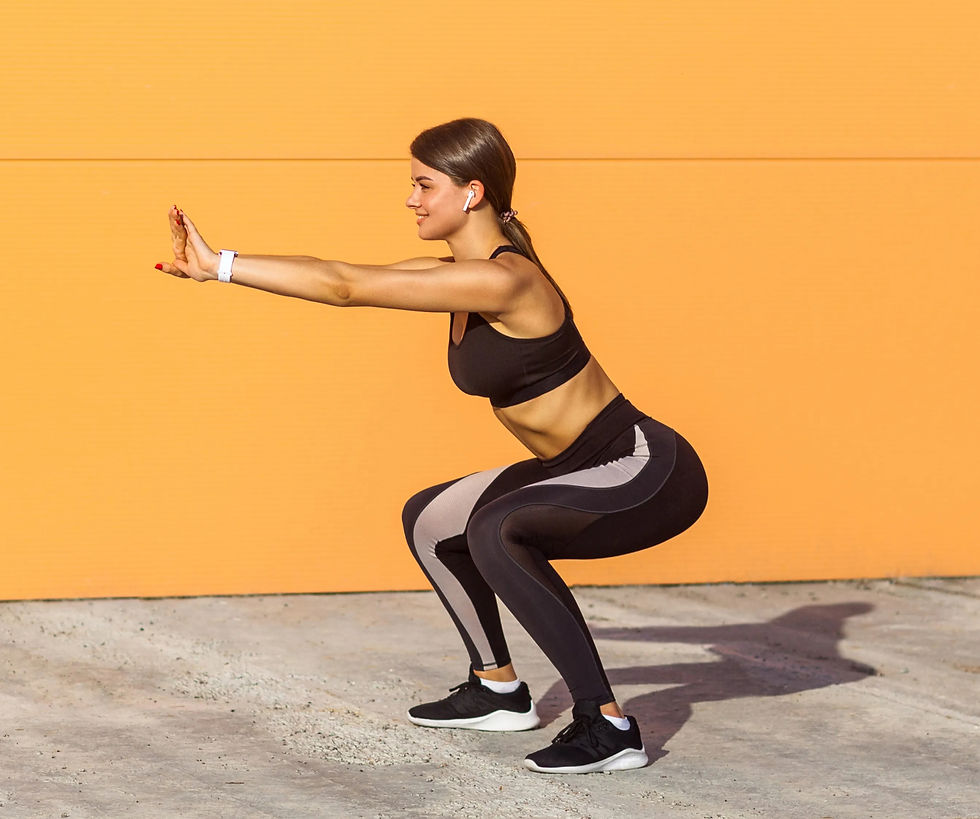
How to do them:
Stand with your feet slightly wider than hip-width apart.
Turn your toes out slightly if that feels comfortable.
Bend your knees and lower into a squat while keeping your chest lifted.
Hold the squat near the bottom of your range.
Perform small, controlled pulses up and down.
Stand tall and squeeze your glutes at the top.
Beginner tip: Keep your knees tracking in the same direction as your toes and avoid bouncing. The pulses should be small and controlled.
Try: 10–15 pulses for 2–3 rounds.
4. Bird Dog with Long-Lever Lower and Lifts
This variation combines glute work with core and balance training. The long-leg position increases the challenge without requiring heavy equipment.
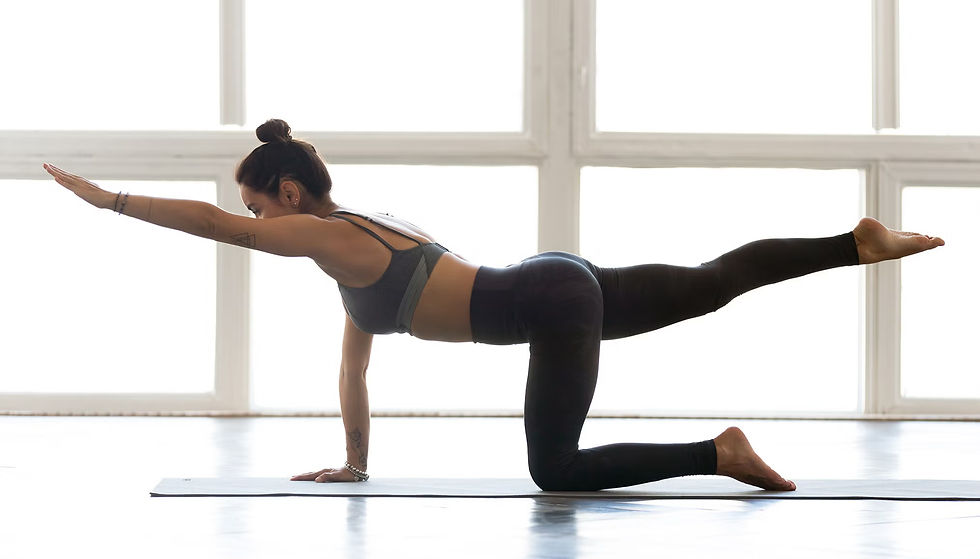
How to do them:
Start on your hands and knees with your hands underneath your shoulders and knees underneath your hips.
Engage your core and keep your spine neutral.
Extend one leg straight behind you.
Slowly lower the extended leg toward the floor.
Lift it back up with control, focusing on squeezing your glute.
Keep your hips as square to the floor as possible.
Complete your repetitions before switching sides.
For an additional challenge, extend the opposite arm forward while keeping your core stable.
Beginner tip: Your leg doesn't need to lift high. If your lower back starts arching, reduce the height of your leg.
Try: 8–12 controlled repetitions per side.
5. Clam Shells
Clam shells are excellent for targeting the glute muscles on the outside of your hips. They're also a great exercise for learning how to stabilize your pelvis.
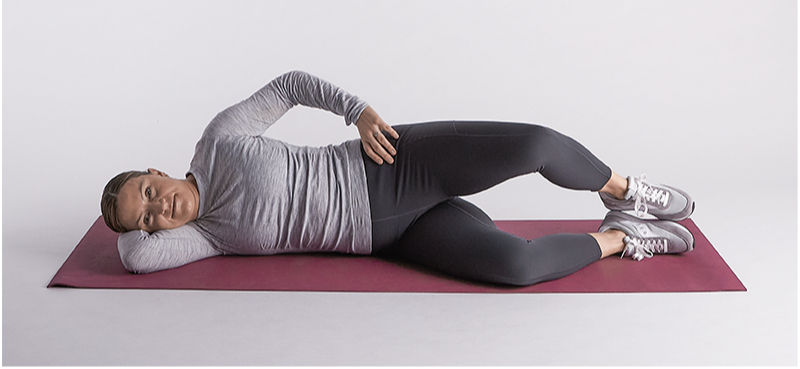
How to do them:
Lie on your side with your knees bent and stacked.
Rest your head comfortably on your bottom arm.
Keep your heels together and your hips stacked.
Engage your core.
Keeping your feet together, slowly lift your top knee.
Pause at the top and squeeze the side of your glute.
Lower your knee with control.
Repeat before switching sides.
Beginner tip: Don't let your hips roll backward as you lift your knee. Keeping your pelvis still is more important than lifting your knee as high as possible.
Try: 12–15 repetitions per side.
How to Put These Exercises Together
For a simple beginner glute-focused Pilates workout, try:
Standing sidekicks: 10–15 reps per side
Squats with pulses: 10–15 pulses
Bird dog long-lever lowers and lifts: 8–12 reps per side
Clam shells: 12–15 reps per side
Glute bridges: 12–15 reps
Complete 1–3 rounds, depending on your fitness level. Focus on slow, controlled movements rather than rushing through the repetitions.
Can Pilates Really Grow Your Glutes?
Pilates can help strengthen and develop your glute muscles, particularly when exercises become progressively more challenging. However, noticeable muscle growth generally requires consistent resistance training, adequate nutrition, recovery, and progressively increasing the demands placed on the muscles.
As these exercises become easier, you can increase repetitions, add resistance bands, increase time under tension, or progress to more challenging variations.
Most importantly, focus on quality movement. You should feel your glutes doing the work rather than simply trying to complete as many repetitions as possible.
Final Thoughts
You don't need an advanced workout to start building stronger glutes. These five beginner Pilates exercises provide a simple foundation for learning how to activate and strengthen your glutes while also improving balance, control, and core stability.
Stay consistent, prioritize good form, and gradually increase the challenge as your strength improves. Your glutes don't need to be exhausted after every workout; they need a reason to adapt and enough recovery time to do it.


Comments